
Key Takeaways
- Vision therapy is not just for kids. Adults can benefit from it too.
- It addresses issues like eye coordination problems, focusing difficulties, and screen-related discomfort.
- The brain can retrain visual skills at any age with consistent practice.
- A thorough vision evaluation goes beyond what a standard eye exam covers.
- Programs are personalized to fit your specific needs and condition.
You get a new glasses prescription, but the headaches keep coming. Reading feels tiring. Staring at a screen for an hour leaves your eyes sore and strained. A new prescription helps with clarity, but it does not always fix how your eyes work together as a team.
Vision Care Center offers vision therapy programs for adults that can improve the way your eyes and brain communicate, which may reduce strain, discomfort, and focusing struggles in everyday life. It is a structured, personalized program, not a quick fix. And yes, it can work for grown-ups.
What Vision Therapy for Adults Actually Looks Like
A Program Built Around You
No two people experience vision problems the same way, so no two programs look the same either. A vision therapy plan involves guided exercises, specialized tools, and follow-up care based on your specific condition. The goal is to address what is actually going on with your visual system, not just hand you a generic set of drills.
Progress is tracked regularly, and the plan adjusts as your eyes respond. It is a hands-on process that takes time and consistency. You can learn more about how vision therapy retrains visual skills through neuroplasticity rather than simply strengthening eye muscles.
Common Conditions It Addresses
Vision therapy is often used for binocular vision dysfunction, which happens when your two eyes struggle to work together smoothly. It can also help with focusing problems that make reading or switching between near and far objects uncomfortable. Many adults dealing with visual discomfort from screen use or reading find that their symptoms are connected to these kinds of coordination issues.
Signs Your Vision May Need More Than Glasses
Sometimes a new prescription is not enough. If any of these sound familiar, it may be worth looking deeper into how your eyes are functioning together.
- Frequent headaches after reading or screen time
- Double vision or trouble focusing on close objects
- Eye strain that does not improve with a new prescription
- Tired eyes after tasks that should not feel so exhausting
These are not signs that something is wrong with your prescription. They may point to an underlying coordination or focusing issue that glasses alone cannot correct. If headaches are a recurring problem, the connection between vision and headaches is worth exploring with an eye doctor.
How Adults Respond to Vision Therapy
The Brain’s Role in Vision
Your eyes and brain are a team. The brain processes what your eyes send it, and when that communication is off, even small visual tasks can feel like a lot of work. The good news is that the brain stays adaptable into adulthood. With consistent, targeted practice, adults can retrain visual skills over time.
This is not about willpower or trying harder to see. It is about giving your visual system the right kind of structured input so it can build stronger habits.

What Progress Can Feel Like
Adults who go through vision therapy often notice gradual changes in their daily comfort. Eye strain during work hours may ease up. Reading a book in the evening might feel less tiring. Everyday focus tasks, like switching between a screen and a printed page, can start to feel more natural.
Progress is usually steady rather than sudden, and regular check-ins help keep the plan on track. For adults spending long hours on screens, pairing therapy with habits like the 20-20-20 rule can support your comfort between sessions.
What to Expect From Your Eye Doctor in Peoria & Washington, IL
Your First Vision Evaluation
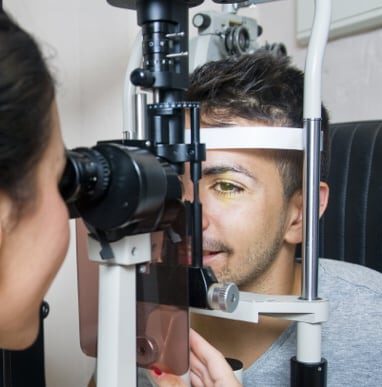
A thorough vision evaluation looks at how both of your eyes work together, not just how well each eye sees on its own. This kind of assessment can catch issues that a standard eye exam may not pick up, like subtle coordination problems or focusing inefficiencies. It gives the team a clear picture of what is actually happening with your visual system. The American Optometric Association outlines what a comprehensive eye exam covers, which goes well beyond a basic vision screening.
A Personalized Care Plan
After your evaluation, a care plan is built around your specific findings. Exercises and tools are matched to your condition, and check-ins are scheduled regularly to track how you are responding. Our team at Vision Care Center takes the time to understand your lifestyle and goals, so your care fits your real life, not just a textbook description of your condition. You can schedule your vision evaluation at either our Peoria or Washington location.
Vision Therapy Across Different Stages of Life
Adults in Their Working Years
Screen fatigue and reading strain are two of the most common complaints adults bring up today. Long hours at a desk, constant switching between devices, and back-to-back video calls put real demand on your visual system. Vision therapy can support more comfortable days at work and at home by addressing the root of that strain. If digital eye strain is something you deal with regularly, it may be connected to how your eyes are coordinating.
Seniors & Long-Term Vision Health
Eye coordination naturally changes as you get older. Tasks like reading, driving, or watching TV can become less comfortable over time, and that shift is not always about prescription strength. Vision therapy can support clarity and visual comfort for seniors, with ongoing care from a team that gets to know you and your needs over time.
At Vision Care Center, serving people across Peoria and Washington, IL, our focus is on long-term care that grows with you. A comprehensive eye exam is a good starting point if you are curious about whether vision therapy could help. Contact us to schedule a thorough evaluation.