
Key Takeaways
- Amblyopia happens when the brain starts ignoring signals from one eye, affecting clarity and depth perception.
- Traditional treatments like patching don’t train both eyes to work together.
- Vision therapy targets the brain-eye connection, not just the weaker eye.
- It can be effective for children, teens, and adults.
- A thorough eye evaluation is the right first step toward a personalized plan.
Your child squints at the board even with glasses on. Or maybe you’ve always struggled with depth perception and never knew why. These are experiences that often point back to amblyopia, a condition that’s more common than most people realize.
Vision therapy can help treat amblyopia by training both eyes to work together and strengthening the connection between the eyes and the brain. It’s a different approach from traditional treatments, and for many people, it gets to the root of what’s actually happening. Vision Care Center offers personalized vision therapy programs designed around each individual’s specific needs and condition.
What Amblyopia Actually Does to Your Vision
Amblyopia isn’t just about one weak eye. One eye sends weaker signals to the brain, and over time, the brain starts tuning that eye out. It’s a communication problem as much as a vision problem.
The result shows up in daily life more than you’d expect. Depth perception gets off. Coordination suffers. Things look blurry even when you’re wearing the right prescription glasses. Amblyopia affects how the visual system develops, which is why addressing the brain-eye connection matters so much.
Signs to Watch for in Kids and Adults
Amblyopia doesn’t always announce itself. In kids especially, it can go unnoticed until a routine eye exam catches it. Here are some signs worth paying attention to:
- Squinting, tilting the head, or closing one eye to see better
- Trouble with eye-hand coordination during sports or activities like catching a ball
- Blurry vision that sticks around even with glasses on
Adults can have amblyopia too, often without realizing it was never properly addressed in childhood.
Traditional Amblyopia Treatments and Their Limits
The most familiar treatments for amblyopia are eye patches and prescription eye drops. Both work by blocking or blurring the stronger eye, which pushes the weaker eye to work harder. It’s a logical idea, but it has a significant gap.
Neither approach teaches both eyes to function as a team. They focus on one eye in isolation, which means the brain never fully learns how to blend the two images into one clear picture.
Why Some People Don’t Respond to Patching
Patching is tough, particularly for kids who resist wearing the patch consistently. Without consistent use, progress stalls. And even when patching does work, amblyopia can return after treatment stops because the underlying coordination issue wasn’t fully addressed.
For a lot of families, this is the moment they start looking for something more. Learning about why vision therapy benefits children can help parents make a more informed decision about next steps.
How Vision Therapy Approaches Amblyopia Differently
Vision therapy shifts the focus from covering one eye to training both eyes to communicate with the brain together. The goal is to build a real working connection, not just force one eye to do more work temporarily.
Every program is tailored to the individual. What works for a seven-year-old with mild amblyopia looks different from what someone in their thirties needs after years of the brain compensating on its own. Vision therapy retrains visual skills through neuroplasticity, using specialized tools and techniques rather than simply exercising eye muscles.
What Vision Therapy Sessions Often Include
Sessions are hands-on and engaging, especially for younger patients. You’re not just sitting still and reading letters off a chart. Some common components include:
- Interactive visual exercises designed to challenge and coordinate both eyes
- Special glasses or tools that help balance how each eye contributes to what you see
- Ongoing progress tracking so the program can be adjusted as your vision responds
Is There an Age Limit for Vision Therapy?
One of the most common questions parents and adults ask is whether there’s a cutoff age. The short answer is no.
The brain stays adaptable well beyond childhood, which means adults can respond to vision therapy too. That said, earlier treatment tends to lead to faster progress because younger brains are wired to form new connections more quickly. Learn more about what pediatric vision therapy involves and how it supports younger patients specifically.

What to Expect from a Vision Therapy Program
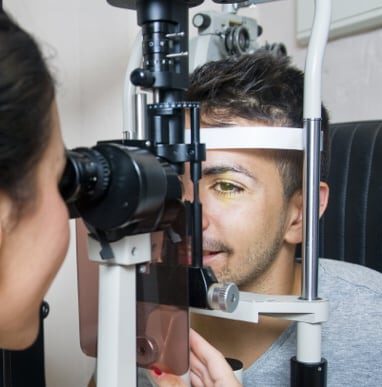
It starts with a thorough eye evaluation. The eye doctor takes a close look at how your eyes work together, not just how sharp your vision is on its own. That information shapes everything that comes next. A comprehensive children’s eye exam goes well beyond a basic screening and can identify issues that would otherwise go undetected.
Program length varies based on severity, age, and how your eyes respond. Most programs combine in-office visits with at-home activities so progress continues between appointments.
How Progress Is Measured Along the Way
The team checks in regularly to track how your vision is changing. If something isn’t clicking, the program gets adjusted. The goal is lasting improvement, not a temporary fix that fades once you stop showing up.
Finding an Eye Doctor in Peoria and Washington, IL
If any of this sounds familiar, a thorough evaluation is the right place to start. An eye doctor in Peoria and Washington, IL can assess exactly what’s going on with your vision and whether vision therapy makes sense for your situation.
Vision Care Center offers personalized vision therapy programs at both the Peoria and Washington, Illinois locations. The team builds each plan around the individual, because the same approach doesn’t fit every person or every case. Reach out to Vision Care Center today to schedule your evaluation and take a clear look at what your vision could become.