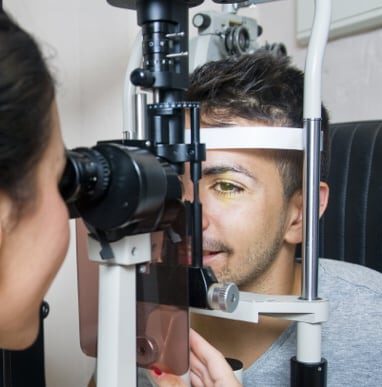

You might chalk up your headaches, dizziness, or constant eye fatigue to screen time or stress. But sometimes the real issue is happening behind the scenes, in the way your eyes and brain communicate.
Binocular vision dysfunction, or BVD, happens when your eyes send slightly mismatched signals to the brain, making it work overtime to patch together one clear image. That constant effort is what drives many of the symptoms people live with for years without connecting to their vision.
How Your Eyes Work Together
Your eyes are meant to work as a team. Each one captures a slightly different angle, and your brain blends those 2 images into 1. When that blending process breaks down, even by a very small amount, your brain needs to start compensating.
It overworks the muscles around your eyes to force alignment. Think of it like holding a slightly heavy bag for a short trip. No big deal at first. But hold it for hours and your whole arm aches. That’s what your eye muscles go through when BVD goes unaddressed.
The Main Causes of BVD
Several different factors can disrupt the delicate teamwork between your eyes.
Vision-Related Causes
Some cases of BVD start with how your eyes focus. Nearsightedness, farsightedness, and astigmatism can all throw off the balance between what each eye sees. When 1 eye has a noticeably different prescription than the other, the brain receives 2 images that don’t quite match.
Age also plays a role. As you get older, coordination between your eyes may become harder to maintain.
Eye Alignment and Neurological Causes
Crossed eyes and lazy eye are 2 of the more recognizable factors associated with BVD. Both involve an eye that doesn’t point or process information the same way as its partner.
Beyond the eyes themselves, the nerves and brain pathways involved in vision can also contribute. If there’s a disruption in how visual signals travel or get processed, the teamwork between your eyes breaks down at a deeper level.
Lingering Trauma
Head injuries are a significant factor. A concussion, even a mild one, can disrupt the eye-brain connection enough to bring on BVD symptoms. Stroke and other neurological conditions can do the same, sometimes changing vision function well after the initial event.
Multi-Factor Causes
In many cases, BVD isn’t tied to just one cause. A combination of factors, like an existing refractive error plus a recent injury, can push the visual system past the point where it can quietly compensate.
Can BVD Come on Suddenly?
Yes, this condition can surprise people by showing up without warning. Your brain is remarkably good at compensating for small visual mismatches, sometimes for years. But this system has a limit.
Stress, fatigue, illness, or an injury can push your visual system past that limit. When that happens, symptoms that were quietly building up can seem to appear out of nowhere. You might have had no vision complaints for decades, then suddenly find yourself dealing with chronic headaches or balance issues.
That doesn’t mean something new is wrong. It often means the compensation system finally gave out.
Signs You Might Have BVD
This condition shows up in ways that don’t always feel like a standard vision problem. Watch out for these common physical and visual signs:
- Frequent headaches, especially after visual tasks
- Dizziness or a feeling of being off-balance
- Blurred or double vision
- Sensitivity to light or busy visual environments
If certain tasks feel harder than they should, that’s worth paying attention to. BVD is a major condition that drives reading and eye tracking problems, so look for these indicators:
- Skipping lines or losing your place while reading
- Needing to re-read the same sentence multiple times
- Eye fatigue during screen time that rest doesn’t fully fix
What Can Be Done About BVD
Some of the most widely used approaches for BVD are prism lenses and vision therapy. Prism lenses work by adjusting the path of light entering your eyes, which can help reduce the strain on your brain as it tries to merge mismatched images.
Vision therapy takes a different approach. It’s a structured program of eye exercises designed to retrain how your eyes and brain coordinate, building up that connection over time.
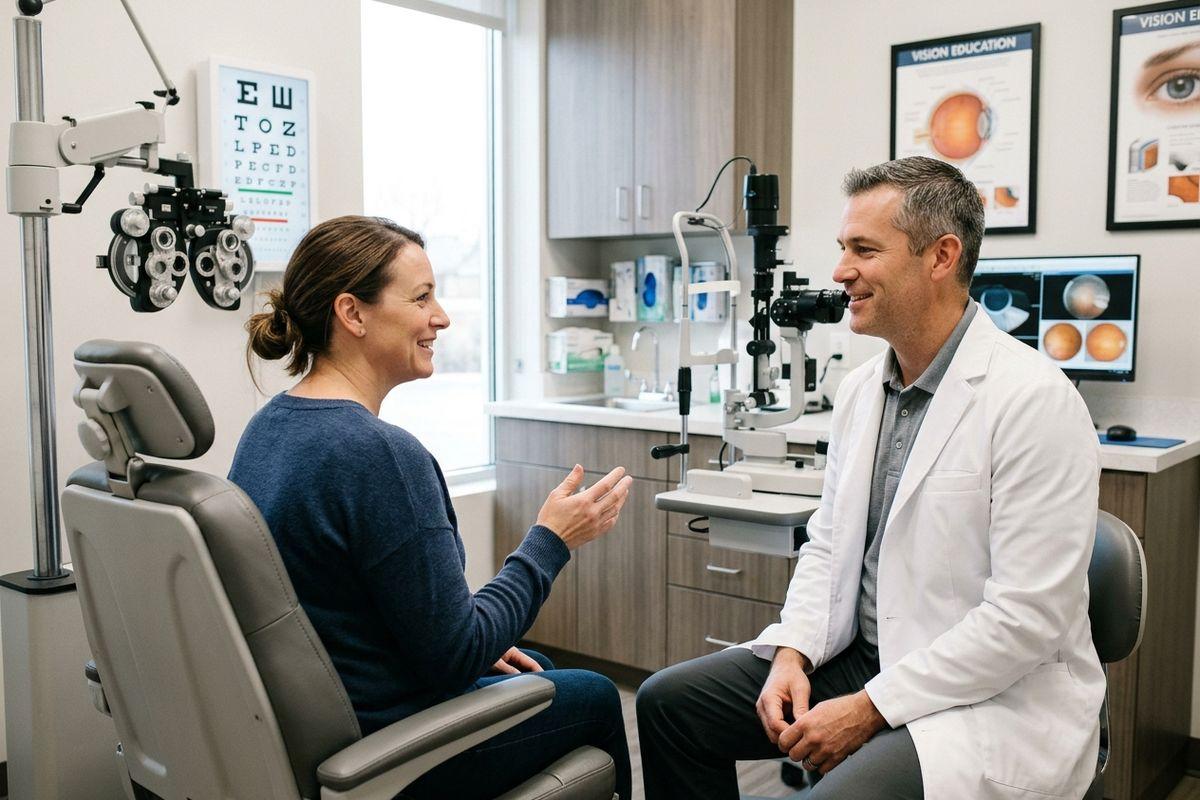
Because every patient is different, your optometrist can tailor both options to your specific situation. Unfortunately, a standard eye exam often misses this condition entirely. The testing used in a routine checkup simply isn’t set up to detect subtle coordination issues. Online vision tests fall even shorter because they completely lack an in-depth evaluation. That’s why working with an experienced optometrist makes a real difference.
Stop Living With Unexplained Symptoms
Targeted testing identifies what’s actually going on, keeping you from spending years managing symptoms without answers.
At Vision Care Center, our team focuses on exactly this kind of in-depth evaluation. If you’ve been living with unexplained headaches, dizziness, or reading struggles, reaching out is a great place to start. Book your appointment and let’s put you on the path to comfortable vision.