
It’s incredibly frustrating to deal with unexplained headaches and neck tension that persist despite trying new glasses or reducing screen time. Finding the root cause of these daily frustrations often feels like a guessing game. What you may be experiencing is binocular vision dysfunction (BVD), a condition where your eyes and brain struggle to work as a team.
This misalignment can show up in ways that seem completely unrelated to your eyesight. Addressing the root cause can help you find the answers you need to feel comfortable again.
What Is Binocular Vision Dysfunction?
BVD isn’t just one condition. It’s a group of vision problems that happen when your eyes send slightly mismatched images to your brain. Your brain works overtime trying to merge those images, and that constant effort wears you out in ways that feel completely unrelated to your eyes.
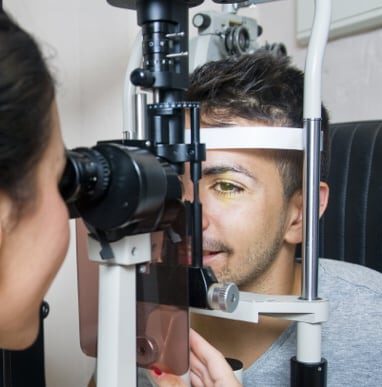
But here’s the tricky part. A standard eye exam often checks how sharp your vision is, not how well your eyes work together. That means BVD can go undetected for years, even when you’re seeing your eye doctor regularly. Get the right evaluation and uncover what is really going on with your sight.
Recognizing the Signs of BVD
This condition presents itself in a variety of surprising ways that go far beyond standard eye strain.
Physical and Visual Signs
The most obvious signs tend to show up in your head and neck. You might notice frequent headaches that seem tied to screen time or reading. Blurred or double vision can come and go throughout the day. Light sensitivity and eye fatigue are also common, especially after longer stretches of focused work.
Neck and shoulder tension is another sign many people overlook. When your eyes aren’t aligned, your brain often prompts you to tilt your head slightly to compensate. Do that for months or years, and your muscles feel it.
Balance and Motion Struggles
Vision misalignment can affect your sense of balance more than you might expect. Some people feel dizzy or disoriented in wide open spaces like grocery stores. Others feel nauseous during car rides, even when they sit comfortably in the passenger seat.
Pay attention to these specific issues:
- Dizziness or unsteadiness when walking through crowded spaces
- Motion sickness during car trips, escalator rides, or scrolling on a phone
- Difficulty falling asleep or waking up feeling unrested
Reading and Focus Challenges
Reading is one of the clearest places where BVD shows up. You might find yourself re-reading the same line 3 times. Words can look like they’re moving, blurring, or running together, especially toward the end of a page. Staying focused for any stretch of time feels like a real effort.
While these can appear like issues with attention, they aren’t. Instead, they are vision problems wearing the mask of attention problems.
How BVD Affects Kids Differently
In children, BVD symptoms look a lot like learning difficulties. A child who avoids reading, struggles to copy from the board, or seems easily distracted in class might actually have a vision coordination problem that hasn’t been caught yet. That’s why BVD in kids is so often mistaken for dyslexia or ADHD.
Eye misalignment during early development can affect how a child’s brain processes visual information over time. Uncovering it early gives kids a real shot at catching up, both in school and in how they feel day to day.
Vision therapy offers meaningful benefits for children dealing with these kinds of coordination challenges. If your child is struggling in ways that don’t quite fit the usual explanations, a thorough vision evaluation is worth pursuing.
Common Causes and Misdiagnoses
BVD can stem from several different sources. Refractive errors like nearsightedness or astigmatism can affect how your eyes work together. Eye alignment conditions such as lazy eye or crossed eyes are also common factors. Head injuries, concussions, and certain neurological conditions can bring on BVD even in people who never had vision problems before.
Medical professionals often misdiagnose these vision issues because the symptoms heavily overlap with anxiety, migraines, and inner ear disorders. This overlap leads many patients down a long road of appointments before anyone looks closely at their visual coordination.
Get a thorough eye evaluation from an optometrist and secure accurate answers.
How BVD Gets Treated and When to Seek Help
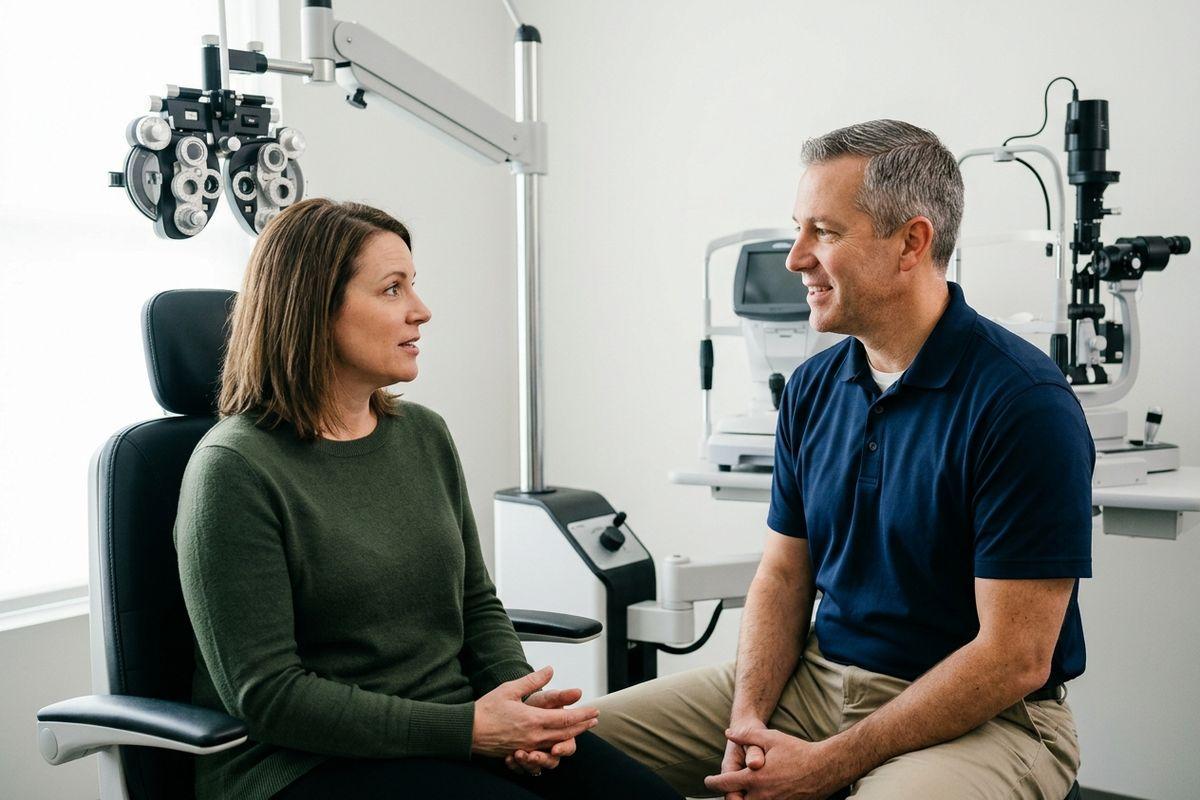
Finding the right treatment depends entirely on what is driving your specific symptoms. There isn’t a single approach that works perfectly for everyone.
Your optometrist may recommend the following targeted treatments:
- Prism lenses to align the images your eyes send to your brain
- Neurolens glasses equipped with contoured prisms to correct misalignment and reduce daily strain
- Vision therapy programs built around your specific needs and progress
A good plan starts with a clear picture of what’s actually happening with your vision. Talk to your eye care professional to explore how vision therapy works and what a personalized program typically involves.
Take the Next Step for Clear, Comfortable Vision
Lingering symptoms lasting more than a few days require professional attention. The same rule applies to kids showing reading or focus struggles at school, especially if they aren’t improving with extra tutoring. Don’t wait; reach out to your optometrist so we can look beyond the basics.
Get a comprehensive evaluation to truly understand your daily struggles before mapping out a new path forward. Schedule your visit with Vision Care Center today and get the personalized care you deserve.