You have a busy schedule, and fitting in appointments can be a challenge. When it’s time to check on your eye health, you might have wondered how much time you need to set aside.
A complete eye exam at Vision Care Center typically takes between 30 and 90 minutes, depending on your individual needs. This allows enough time for a thorough evaluation and a conversation about your vision without feeling rushed.
The Timeline for a Comprehensive Eye Exam
Most routine exams last from 30 to 60 minutes. This gives the eye doctor time to perform a series of tests to check your vision sharpness and the overall health of your eyes. We want to make sure you leave feeling like you understand your eyes better than before, so we give you plenty of time to ask questions and discuss any concerns.
If you are a new visitor or have complex vision needs, your appointment may take up to 90 minutes. This extra time helps our team to get a full picture of your health history and perform any additional tests that might be needed.
Factors That Shape Your Exam Duration
Your Age and Health History
Your first visit to an eye doctor often takes a bit longer. This is because our team gathers important details about your personal and family health history to create a baseline for your future care. This information helps them understand your unique risk factors.
Children and seniors may also need special tests suited to their age. Discussing any existing health conditions is also part of the process, as things like diabetes or high blood pressure can affect your eyes.
Your Specific Vision Needs
If you experience new symptoms (like blurry spots or light flashes), your eye doctor may need to investigate further with specific tests. This adds time to the appointment but is important for getting clear answers about your eye health.
Getting fitted for contact lenses for the first time also requires extra steps beyond a standard eye exam. Your appointment may be longer to include measurements, a trial fitting, and instructions on how to care for your new lenses.
A Step-by-Step Look at Your Appointment
First Tests and History
Your visit often starts with a technician who guides you through some initial tests. They may review your medical history, ask about any vision problems you have noticed, and take some measurements of your eyes.
These early steps can include checking your eye pressure, which is a test involving a puff of air. You might also have a test to check your side vision.
The Exam with Your Eye Doctor
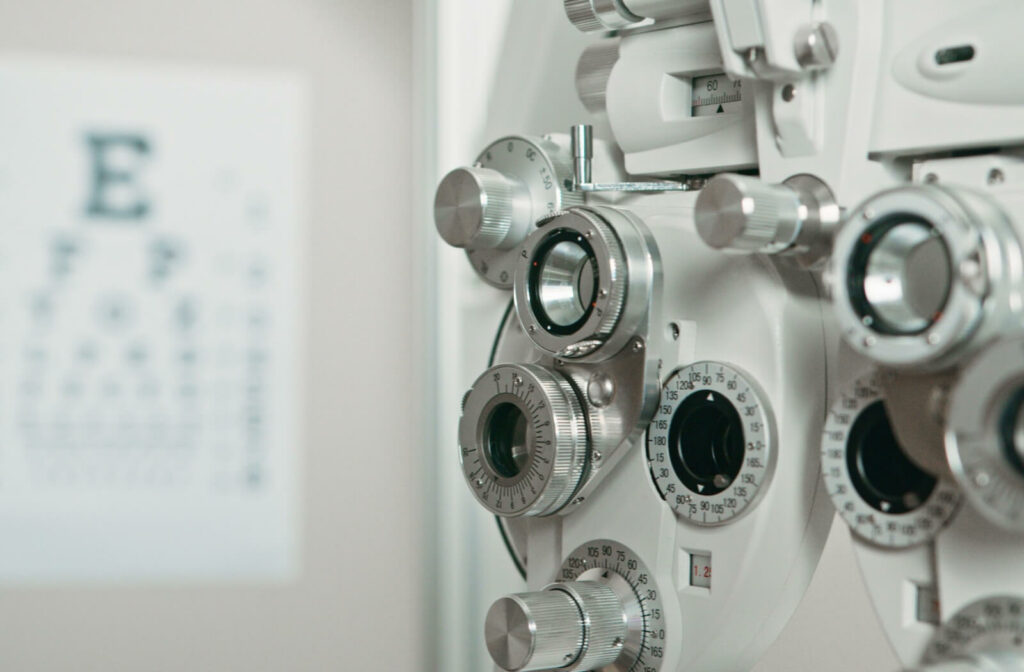
Next, you meet with the eye doctor for the main part of the evaluation. You can read from an eye chart to test the sharpness of your vision at different distances, which helps them pinpoint your prescription.
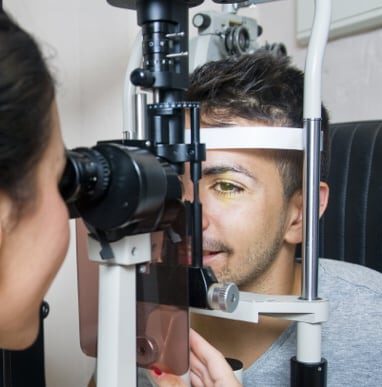
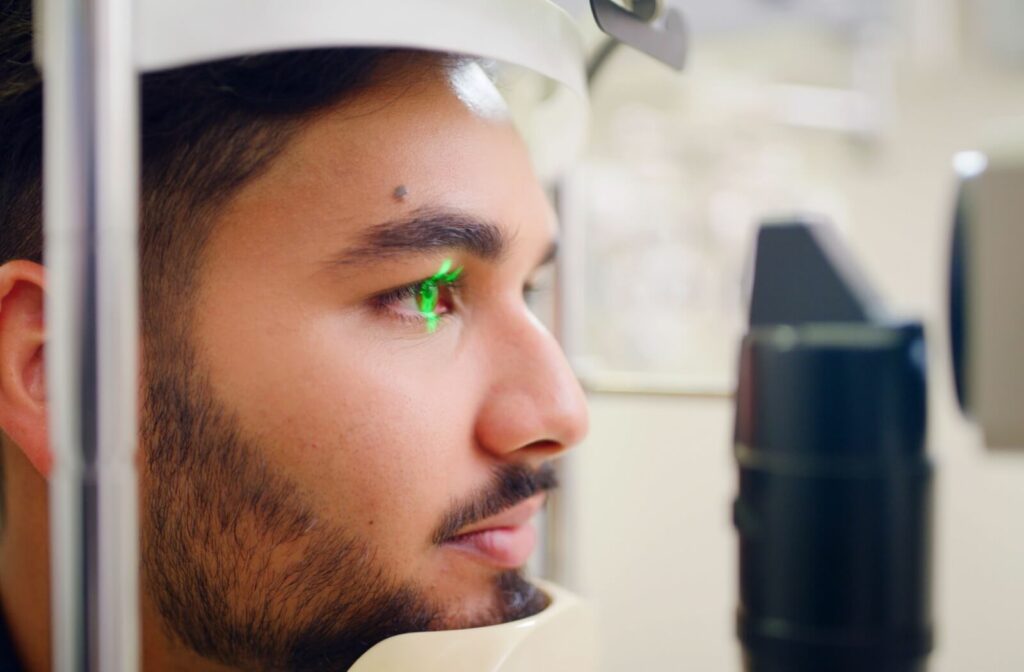
The eye doctor can also check how well your eyes work together by evaluating your eye movement and alignment. Finally, they may use special instruments to look inside your eyes to check the health of the retina (at the back of your eye), optic nerve (which sends signals to your brain), and more to screen for common eye diseases.
Eye Dilation, Your Vision, and the Drive Home
Why Dilation Can Be Part of an Eye Exam
Sometimes, the eye doctor may recommend dilating your eyes. Though it isn’t always necessary, it involves using special eye drops to temporarily widen your pupils. Think of it like opening a door wider to get a better view of the room inside.
Dilation gives the eye doctor a clear look at the back of your eye. This helps provide a clear path to spot early signs of certain eye and health conditions. Management options are often more effective when eye conditions are found early, which is why our eye health team wants to be as thorough as possible.
How to Plan for Dilation
The dilating drops usually take about 20 to 30 minutes to kick in. After the exam, your vision may be blurry, and you may be more sensitive to light for several hours. Bringing a pair of sunglasses can help you feel more comfortable.
Your pupils don’t react to light as well while they are dilated, which can affect your ability to drive safely. For this reason, many people find it necessary to ask someone to drive them home after their appointment.
The Value of an Eye Health Evaluation
An eye exam is much more than a simple check for glasses or contact lenses. It is a key part of your overall wellness routine. Regular evaluations help protect your sight and can even offer insights into your general health.
Take Care of Your Eyes Today
Taking this time for your vision is a valuable investment in your well-being. Our team at Vision Care Center is dedicated to providing thorough, personalized care for you and your whole family. Schedule a visit with an eye doctor in Peoria or Washington, and they can help you get the eye care you need.