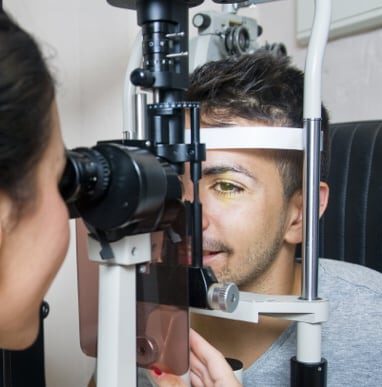

Do you or your child struggle to stay focused while reading, lose your place on the page, or feel exhausted after just a few minutes at a computer? These frustrations can turn school, work, and daily hobbies into an uphill battle. At Vision Care Center, we look beyond 20/20 vision to find the root cause. Often, the challenge isn’t just about sight—it’s about how your eyes and brain communicate.
Our vision therapy program is a customized, structured series of activities designed to retrain your visual system. By strengthening the connection between your eyes and your brain, we help you process information more efficiently and interact with the world with confidence.
How Vision Therapy Works for You
A Personalized Plan for Your Eyes
Your visual system is unique. That’s why vision therapy is not a one-size-fits-all solution. Instead, it starts with a thorough evaluation to identify your specific challenges. From there, a tailored plan is created just for you.
Strengthen the Brain & Eye Connection
Think of vision therapy as physical therapy for your eyes and brain. The exercises are designed to help your brain better control your eye movements and process what you see. The process, known as neuro-visual rehabilitation, helps your visual system work more efficiently.
Everyday Skills & Activities Vision Therapy Improves
Improve How You Read & Learn
Reading can be a struggle when your eyes do not track words smoothly across a page. These eye-tracking problems can be difficult, but vision therapy can help you keep your place, avoid confusing similar-looking words, and improve your ability to understand what you read. This can make homework and learning much less stressful.
Enhance Your Focus & Concentration
If you find it difficult to concentrate on tasks for long periods, your visual system may be working overtime. By training your eyes to work more efficiently, you can sharpen your ability to pay attention. This helps with everything from long work projects to classroom lectures, especially when you need to protect your eyes from computer screens.
Sharpen Hand-Eye Coordination & Balance
From catching a ball to parallel parking, your eyes guide your movements. Vision therapy can improve the connection between what you see and how you react. This can enhance performance in sports, improve your driving skills, and even help you feel steadier on your feet.
Common Vision Conditions That Benefit From Therapy
Certain vision conditions respond well to a structured therapy program. The goal is to train the eyes and brain to work together correctly, addressing the root of the problem.
- Lazy Eye (Amblyopia): Helps improve vision in the weaker eye.
- Crossed Eyes (Strabismus): Works to improve eye alignment and can be an effective treatment for strabismus.
- Eye Teaming & Tracking: Trains eyes to work together smoothly.

Who Can Benefit From a Vision Therapy Program?
Children with School & Homework Challenges
Sometimes, a child’s trouble in school is connected to an undiagnosed vision problem. If your child has messy handwriting, reverses letters after age 7, or strongly dislikes reading, their visual skills may be part of the challenge. Pediatric vision therapy can directly address these issues.
Adults & Seniors with Vision Issues
Vision problems are not just for kids. Many adults experience headaches and eye strain from long hours spent on screens. These headaches can be connected to vision, and therapy can help improve visual comfort and stamina. It is an effective program for motivated adults and seniors who want to improve their visual function.
Athletes Who Want to Improve Performance
In sports, vision is a key part of success. Athletes can use vision therapy to gain a competitive edge by improving skills like reaction time and depth perception. Better visual processing can help you see and react to the game faster.
What to Expect From Your Vision Therapy Journey
A Look at the Timeline
Progress in vision therapy happens over time. While some people may notice improvements within a few weeks, the program’s duration depends on individual needs. Your doctor closely follows your progress during your eye care journey and adjusts the plan as your skills develop.
In-Office Sessions & At-Home Exercises
A typical program includes a combination of weekly in-office sessions and assigned at-home exercises. The guided sessions introduce new skills, while the home practice helps reinforce them. Your eye doctor creates a comprehensive plan to help you achieve your goals.
The team at Vision Care Center is dedicated to helping you and your family improve your visual skills. If you have questions about vision therapy, book an appointment at our Peoria or Washington office to learn more about how it can help you.