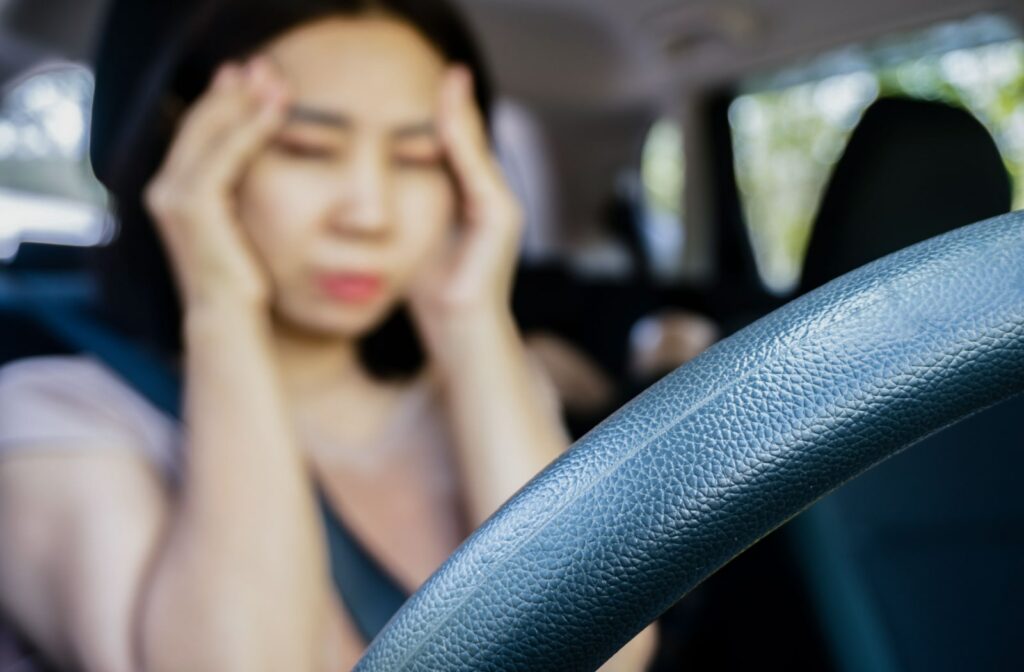
That sudden feeling of disorientation on the road can be unsettling. You might feel a wave of dizziness when changing lanes or a sense of unease watching other cars move around you. This experience can make driving feel stressful and even unsafe, leaving you to wonder what’s happening.
You might be surprised to learn what could be behind that feeling, and the team at Vision Care Center is here to help you understand it. Dizziness while driving can be connected to how your eyes and brain work together, a condition that can often be managed with the right support discovered during an adult eye exam.
Common Signs That Go with Dizziness & Driving
When you feel dizzy behind the wheel, it doesn’t always feel like the world is spinning. This sensation can show up in different ways that you might not initially connect to a vision problem. Pay attention to how you feel, especially if you notice specific symptoms pop up during your drive.
- Car sickness or disorientation: You may feel motion sick even when you are the one driving, or you might feel a general sense of being off-balance.
- Sensitivity to bright lights & glare: Headlights from oncoming traffic or the sun’s glare might feel overwhelming and cause discomfort or a headache.
- Blurry vision & depth perception issues: You may have trouble judging the distance between your car and the one in front of you, a common sign of binocular vision problems, making you feel anxious in traffic.
How Your Eyes Can Affect Your Balance
Your vision plays a huge part in your sense of balance. Your eyes send constant signals to your brain about where you are in space. When those signals are clear and consistent, you feel steady. If the signals get mixed up, your brain can get confused, leading to dizziness and balance problems.
A Look at Binocular Vision Dysfunction
Binocular vision dysfunction happens when your two eyes are not perfectly aligned. Even a tiny misalignment can force your eye muscles to work much harder to create a single, clear image for your brain. Constant strain can overwork your visual system.
Over time, that extra effort can lead to a range of symptoms. You might experience frequent headaches, dizziness, a feeling of being off-balance, and even anxiety, especially in visually busy environments like the road.
Causes of This Vision Condition
A misalignment between the eyes can develop for several reasons. For some, it is a developmental issue they have had since childhood. For others, it can happen after a specific event that affects the brain’s connection to the eyes.
Some common factors include traumatic brain injuries or concussions, which can disrupt the visual system. A stroke or other neurological conditions can also impact eye alignment and coordination. An eye care professional can help determine the source of your symptoms.

Other Reasons You Feel Dizzy on the Road
While vision problems are a frequent source of dizziness, they are not the only one. Your body has a complex system for maintaining balance, and issues in other areas can also create that unsteady feeling. It helps to be aware of other potential factors.
Inner Ear & Balance Disorders
Your inner ear contains the vestibular system—a key part of your body’s balance center. When this system is disrupted, it can send faulty signals to your brain, making you feel dizzy or as if the room is spinning. Conditions like Meniere’s disease can affect this system.
Health & Medication Side Effects
Your overall health can also affect your balance. For instance, a drop in your blood sugar levels can make you feel lightheaded. Some medications list dizziness as a side effect, and even uncorrected vision problems like nearsightedness can contribute to eyestrain and disorientation.
Find Relief for Vision-Related Dizziness
If your dizziness is linked to a vision problem, such as binocular vision dysfunction, there are effective ways to find relief. The goal is to help your eyes work together more comfortably, reducing strain on your brain and easing your symptoms. A personalized approach can help you feel more stable and at ease.
- Address the source of eye misalignment: The first step is to identify and measure the precise misalignment causing the strain.
- Vision therapy: A customized program of visual exercises, known as vision therapy, can help retrain your eyes and brain to work together more effectively.
- Use of specialty lenses: Special glasses with micro-prism lenses, such as Neurolens, can help correct the misalignment, allowing your eye muscles to relax and reducing dizziness.
When to See an Eye Doctor in Peoria & Washington, IL
You do not have to put up with dizziness and discomfort while driving. If any of these symptoms sound familiar, it may be time to speak with a professional. An appointment with an eye doctor in Peoria & Washington, IL can help you get the clarity you need to move forward.
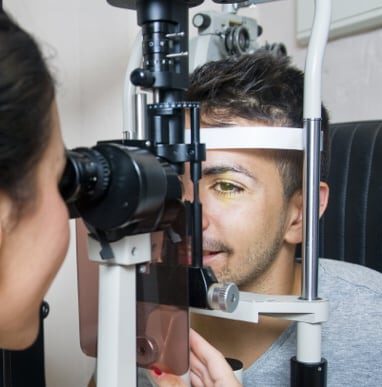
- To identify the cause of the problem: A thorough evaluation can pinpoint whether your dizziness is related to your vision.
- Discuss your symptoms with a professional: You can talk about your experiences in a comfortable setting and get answers to your questions.
- Get help for a safer & more comfortable drive: The right support can help you feel more secure and comfortable behind the wheel again.
Feeling steady and focused on the road is important for your safety and peace of mind. The team at Vision Care Center is dedicated to helping you understand your vision and find solutions that fit your life. Schedule a consultation to discuss your symptoms and explore your options.