
Key Takeaways
- Convergence insufficiency happens when your eyes struggle to turn inward and work together during close-up tasks like reading.
- Common signs include headaches, tired eyes, and words seeming to float on the page.
- Kids may lose their place while reading, which can look like an attention problem.
- Standard school vision checks often miss it, so special eye teamwork tests help.
- Vision therapy, home exercises, and prism glasses can help improve symptoms.
Reading a book or scrolling your phone should feel easy. When your eyes ache or the words blur after a few minutes, something with your eye teamwork may be off. Vision Care Center helps families in Peoria and Washington, IL, figure out why close work may feel so tiring.
Convergence insufficiency is a vision condition where your eyes have trouble turning inward together during close-up tasks, which can lead to eye strain, headaches, and blurry or double vision. The good news is that a vision therapy program can help improve those symptoms.
How Convergence Insufficiency Affects Your Eyes
When you read a book or look at your phone, both eyes need to turn inward slightly and point at the same spot. That teamwork keeps the words clear and single.
With convergence insufficiency, your eyes have trouble turning inward for close work. One eye may drift outward while you focus up close, so your brain works harder to keep the image steady.
This condition shows up often in kids and young adults, though it can affect anyone who spends time on near tasks.
Signs and Symptoms to Watch For
The symptoms can feel easy to brush off at first. You might blame a long day or too much screen time. Still, a pattern tends to show up during reading or other close work. Symptoms can include:
- Headaches and tired, sore eyes
- Double or blurry vision when reading
- Words seeming to float or move on the page
Symptoms in Kids at School
Children don’t always say their eyes feel off. Instead, they show it through their behavior in the classroom. Watch for these signs during homework or reading time:
- Trouble focusing during reading
- Loss of place or skipped lines on the page
- Behavior sometimes mistaken for an attention problem
Why Convergence Insufficiency Happens
The root of the issue sits with how your eyes and brain communicate. The nerves that tell your eye muscles to turn inward may not send the right signals, so the muscles fall out of sync.
Family history can play a role too. If a parent had eye teamwork trouble, a child may share the same tendency. In some cases, a head injury or certain health conditions connect to the problem as well.

Screen Time and Near Work
Long hours on a screen can make symptoms feel worse by the end of the day. Your eyes stay locked at one close distance for too long, and the strain can build.
Short breaks can help. Try looking at something far away for a few seconds every so often to give your eyes a rest.
How an Eye Doctor Diagnoses It
Convergence insufficiency often slips past a basic school vision check. Those checks measure how clearly you see letters on a chart, not how well your eyes work as a team.
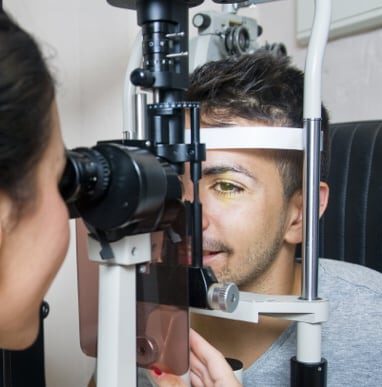
An optometrist uses special tests to measure that teamwork. Your eye doctor watches how your eyes move as they focus on a target up close and asks about your near-work symptoms, like when the headaches start or where words seem to blur.
That fuller picture helps your eye doctor spot what a quick check can miss.
Treatment Options and What to Expect
Treatment focuses on training your eyes to work together with less effort. The right plan depends on your symptoms and daily needs. Here’s what a path forward can look like:
- In-office vision therapy guided by a therapist, with exercises that build eye teamwork over time.
- Home exercises that reinforce the progress you make during your visits.
- Prism glasses in some cases, which shift the image slightly to ease the strain on your eyes.
Does It Ever Go Away?
Many people see lasting improvement after they stick with their therapy plan. Reading can feel smoother, and the headache may ease up.
Symptoms can return during stretches of heavy near work. If that happens, a return to therapy can help you get back on track.
We Can Help
At Vision Care Center, our team takes time to understand how your eyes work and what your daily routine demands. If reading leaves you tired or your child struggles to keep their place on the page, schedule an appointment at the Peoria or Washington, IL, location today and take the first step toward clearer, more comfortable near vision.