
Key Takeaways
- Vision therapy helps strengthen the teamwork between your eyes and brain.
- A detailed eye evaluation comes before your first session and shapes your plan.
- Sessions typically last 30 to 45 minutes and use guided exercises with a therapist.
- At-home practice between visits helps reinforce new skills.
- The length of therapy depends on your needs and can span weeks to months.
You might read a page twice and still lose your place. Or your child squints, rubs their eyes, and gives up on homework. These moments often point to how well the eyes and brain work together, not just how sharp your sight is. Our team at Vision Care Center uses vision therapy, a program that trains the eyes and brain to work better as a team.
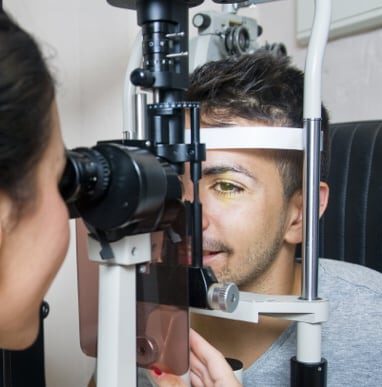
Your first vision therapy session typically starts with guided eye exercises led by a therapist, built around the results of your earlier eye evaluation.
What Is Vision Therapy?
Vision therapy helps kids and adults. Instead of covering up symptoms, it works on the underlying skills that make reading, focusing, and daily tasks feel smoother.
Signs You May Benefit
Some struggles show up quietly and get brushed off as tiredness. Watch for these signs in yourself or your child:
- Frequent headaches or eye strain
- Trouble with reading or holding focus
- Dizziness or double vision
The Eye Evaluation Before Your First Session
Before any exercises begin, an eye doctor performs a detailed evaluation. This goes deeper than a standard checkup that measures how clearly you see letters on a chart.
The exam looks at how your eyes move, how they focus, and how they team up. Those results guide a plan made for you, not a one-size-fits-all routine.
What the Eye Doctor Checks
Each test gives your eye doctor a clearer picture of where your visual skills stand today, including:
- How your eyes align and work together
- Focusing and tracking skills
- Visual processing abilities
What Happens During Your First Session
Your first session usually runs 30 to 45 minutes. A therapist walks you through eye exercises step by step, so you always know what to do next.
Most people come in once a week. That steady rhythm gives your eyes and brain time to build new habits between visits.

Tools You Might Use
The tools may look simple, and that’s the point. Each one has a job in helping your eyes respond and coordinate. They can include:
- Lenses, prisms, and eye patches
- Exercises tailored to your needs
- Friendly, step-by-step guidance
Your At-Home Exercises and Progress
The work doesn’t stop when you leave the office. You’ll likely practice short exercises at home between sessions.
Consistency matters here. Doing your exercises a few minutes each day helps reinforce the skills you practice in the office, much like practicing an instrument between lessons.
Small changes add up over time, so it helps to notice them as you go.
How to Tell It’s Working
Progress often shows up in everyday moments rather than big leaps. You may notice:
- Less eye strain and fewer headaches
- Easier reading and steadier focus
- Better hand-eye coordination
How Long Vision Therapy Takes
There’s no single timeline that fits everyone. The length depends on your goals and the skills you’re working on.
For many people, therapy spans a few weeks to several months of regular sessions. Along the way, your eye doctor reviews your progress and adjusts the plan as your skills grow.
Come See Us
At Vision Care Center, our team is here to serve your vision for years to come. If you or your child notices any of the signs above, reach out to the Peoria or Washington office to schedule an evaluation and take the first step.