Key Takeaways
- Vision therapy is a personalized program guided by an eye doctor to strengthen the connection between your brain and eyes.
- Traditional eye exercises are simple routines you can do at home to help ease strain and fatigue.
- Children who struggle with reading and adults recovering from concussion or stroke can both benefit from therapy.
- A thorough vision assessment helps our team build a plan around your needs.
You’ve tried resting your eyes after a long day of screens, but the blur and headaches keep coming back. Maybe your child squints at homework or loses their place while reading. It’s easy to wonder whether a few simple exercises can help, or whether something more structured is needed.
The main difference comes down to guidance. Vision Care Center offers vision therapy, a doctor-guided program that treats specific vision conditions, while eye exercises are simple routines you do on your own to help ease strain.
What Is Vision Therapy?
Vision therapy is a personalized program guided by an eye doctor. It helps strengthen the connection between your brain and your eyes, so the two work together smoothly. Many programs run over weeks or months, with steady progress along the way.
Tools Used in Vision Therapy
Our team may use special lenses and prisms to train how your eyes focus and align. Balance boards and coordination tools help your body and eyes move as a team. Computer-based activities and games keep sessions engaging while they build skills.
What Are Traditional Eye Exercises?
Traditional eye exercises are simple routines you do on your own. They can help ease eye strain and fatigue after a long day. They can come in handy during long stretches of screen time, whether you’re working or scrolling. However, eye exercises do not replace the care certain eye conditions need. Any vision problems should be properly assessed by your eye doctor.
Examples You Can Try at Home
Here are a couple of eye exercises you can try at home to help ease eye strain:
- Follow the 20-20-20 rule. Every 20 minutes of near work, look at something 20 feet away for 20 seconds.
- Trace a figure-8 in the air with your eyes to work on coordination.
- Shift your focus from a near object to a far one, then back again.
Key Differences Between Vision Therapy and Eye Exercises
Both help your eyes, but they serve different goals. Knowing which fits your situation can save you time and frustration.
- Vision therapy follows a personalized plan, while eye exercises are a general routine.
- Vision therapy is guided by an eye doctor, while exercises are self-directed.
- Vision therapy treats specific conditions, while exercises mainly help ease strain.

Who Can Benefit from Vision Therapy?
Vision therapy can help people of all ages, from young readers to adults recovering from a neurological or brain injury. The signs often show up in daily tasks like reading, driving, or focusing at work.
Signs Your Child May Need Help
Kids don’t always say when something feels off. Watch for these signs during schoolwork and reading time:
- Reading below grade level
- Skips or repeats words
- Reverses letters like b and d
Support for Adults
Adults, including those 65+, can gain a lot from therapy too. It can support recovery after a concussion or stroke, help with relief from double vision, and improve focus and tracking for everyday tasks.
How to Choose the Right Approach for You
Vision therapy may be the best route if you notice ongoing symptoms like double vision, trouble reading, or headaches that simple breaks don’t fix. Eye exercises may help when you mostly want to ease tired eyes after screen time. In many cases, the two work together. Your at-home routine can support the progress you make during therapy sessions.
What to Expect at Your Appointment
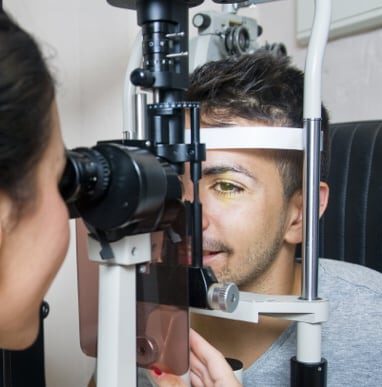
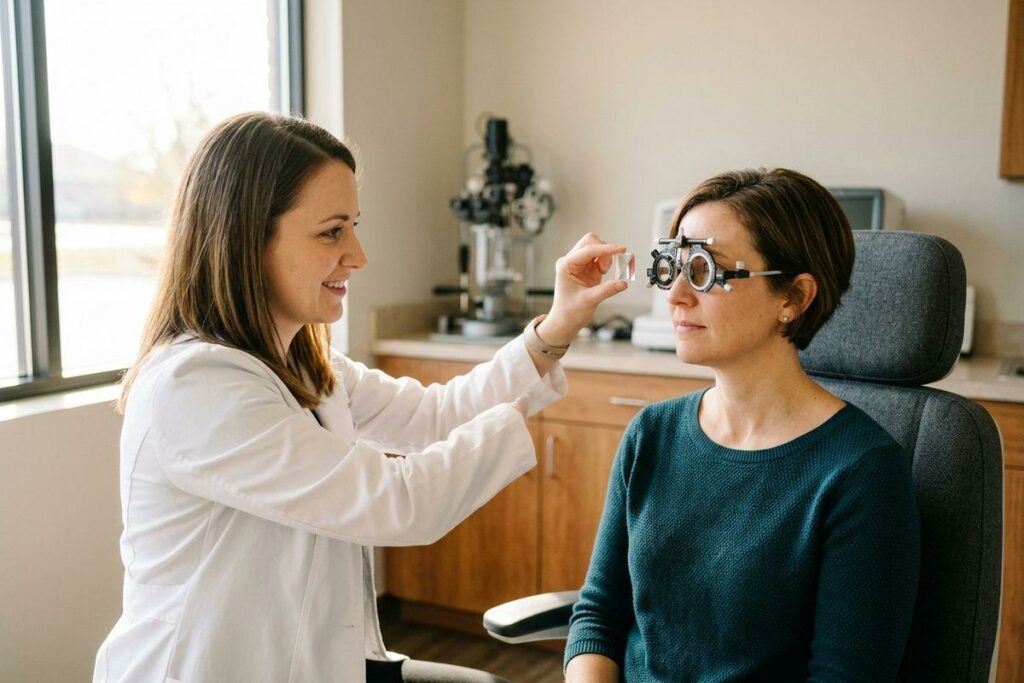
Your first visit starts with a thorough vision assessment. Your eye doctor checks how your eyes focus, move, and team up, then builds a plan around your needs.
Come See Us
Longtime patients know our team at Vision Care Center truly cares about every person who walks through the doors. Schedule your appointment today, and take the first step toward clearer, more comfortable vision.