
Key Takeaways
- Binocular vision dysfunction happens when your eyes sit slightly out of line, so your brain strains to blend two images into one.
- BVD can feel like anxiety, with panic in busy places, dizziness, and stress that seems to come from nowhere.
- Common signs include headaches, double vision, poor balance, and trouble reading.
- In kids, BVD sometimes gets mislabeled as ADHD or a reading problem.
- An eye doctor in Peoria and Washington, IL can check eye teaming and help with prism lenses and vision therapy.
You feel your heart race in a crowded store, the shelves seem to close in, and a wave of dizziness hits out of nowhere. These symptoms can sometimes overlap with anxiety, but they may also be related to how your eyes work together. Binocular vision dysfunction (BVD) is one vision condition that can cause symptoms such as dizziness and visual discomfort.
BVD can copy the signs of anxiety, so the two often get mixed up, which leaves the eye part of the puzzle unchecked for years.
What BVD Is and How It Feels
Your eyes are supposed to point at the same spot at the same time. When they sit slightly out of line, your brain has to work overtime to pull those two images together into one clear picture.
That extra effort tires out the small muscles around your eyes. Think of holding a heavy bag with your arm stretched out. It feels fine for a few seconds, then it starts to ache and shake. Your eye muscles feel the same kind of strain, all day long.
What BVD Vision Feels Like
Many people describe a foggy head and trouble keeping their eyes on one thing. Words might swim on the page, or a face across the room might feel hard to lock onto.
Other times it shows up in your body. You might notice these sensations.
- Dizziness or a spinning feeling
- Nausea after reading or screen time
- Pressure or tightness around your eyes
Why BVD Gets Confused With Anxiety
Here’s where things get tricky. When your eyes struggle to line up, crowded and busy spaces flood your brain with visual signals it can’t sort out fast enough. A packed grocery aisle or a store with tall shelves can leave you feeling panicked and unsteady.
Driving can bring the same wave. Cars moving on both sides, signs rushing past, and lights at night can feel like too much. Over time, that constant visual strain wears on your mood and leaves you feeling anxious and worn down, even when nothing stressful is happening.
Can Anxiety Mimic BVD Symptoms?
The two conditions share a lot of the same signs, so they’re easy to mix up. Racing heart, dizziness, and that overwhelmed feeling can point to either one.
Because of this overlap, it can be helpful to consider whether a vision issue may be contributing to certain symptoms. Anxiety and visual conditions can also occur at the same time, so a comprehensive evaluation can help identify the factors involved.
Common BVD Symptoms to Watch For
BVD can touch your whole day, from your morning commute to your evening reading. The signs often build slowly, so you might chalk them up to stress or tiredness before you connect the dots.
Watch for these symptoms.
- Headaches, light sensitivity, or double vision
- A head tilt, shaky balance, or bumping into things
- Trouble reading, skipping lines, or losing your place
Signs in Kids at School
Children rarely say their eyes feel off. Instead, a child with BVD might squirm during reading time, lose focus quickly, or avoid homework altogether.
Some of these behaviors can overlap with challenges related to attention and learning. If a child is having difficulty with reading or concentrating, a comprehensive eye exam can help determine whether an eye-teaming issue may also be contributing.
Other Conditions With Similar Symptoms
Some conditions can cause symptoms that overlap with BVD. Migraines and vertigo, for example, may also cause headaches, dizziness, and light sensitivity.
Learning and focus conditions add to the mix. Reading, learning, and attention challenges can sometimes occur alongside symptoms such as skipped lines, restlessness, or difficulty staying on task. A comprehensive eye exam can help determine whether an eye-teaming issue may also be involved.
A quick school eye exam usually checks how clearly you see letters on a chart. It doesn’t test how well your eyes team up, so a subtle misalignment can slip right through while your vision reads as 20/20.
How an Eye Doctor in Peoria and Washington, IL Can Help
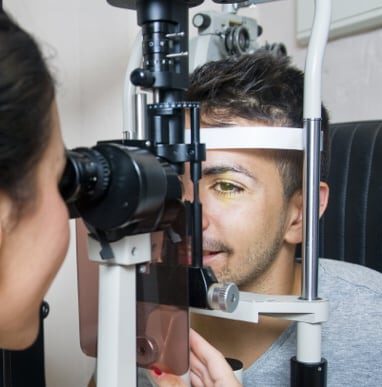
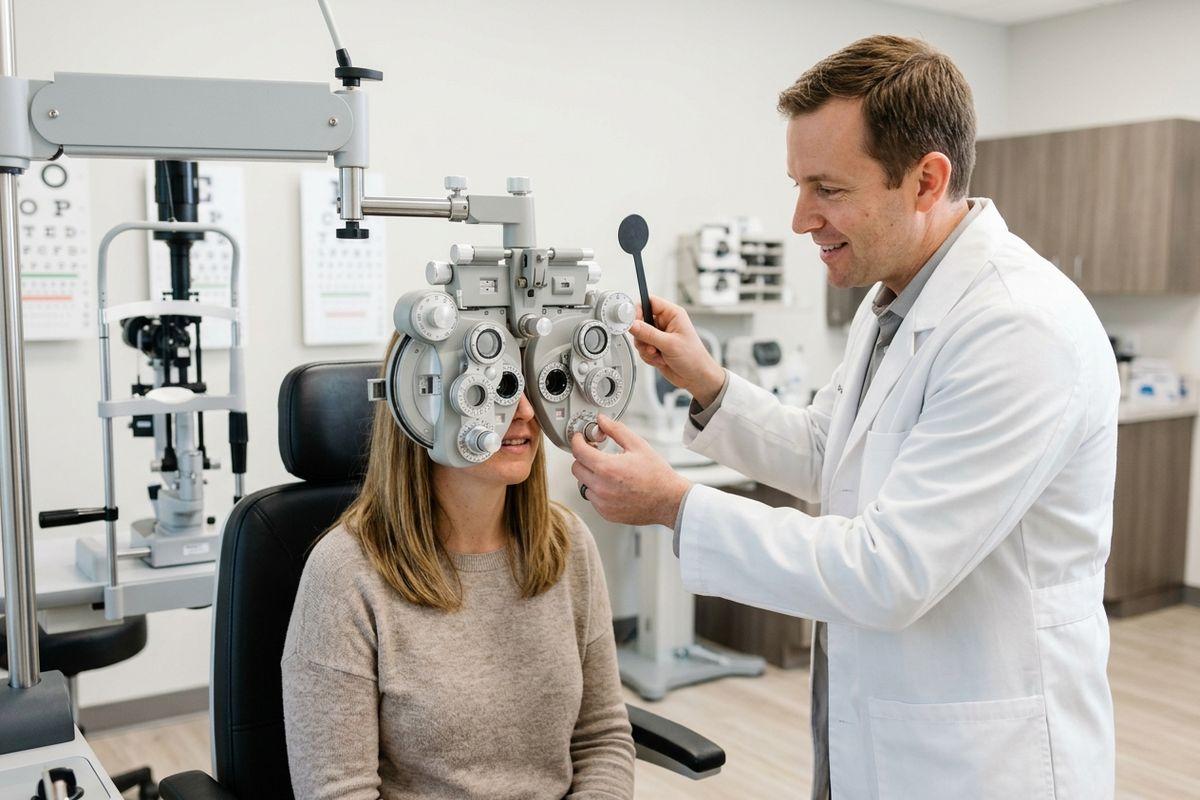
The first step is a full checkup that looks at eye teaming, not just how sharp your sight is. The team measures how your eyes work together and pinpoints any small misalignment behind your symptoms.
Depending on the findings from your exam, prism lenses may help reduce the effort your eyes need to work together.
Vision therapy may also be recommended in some cases to help improve eye coordination over time.
At Vision Care Center, the team is here to serve your vision for decades to come. If your symptoms sound familiar, schedule an appointment at the Peoria or Washington office and find out what’s really behind them.