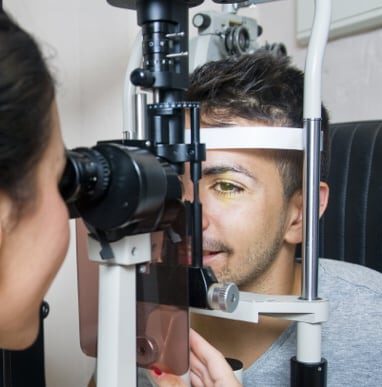
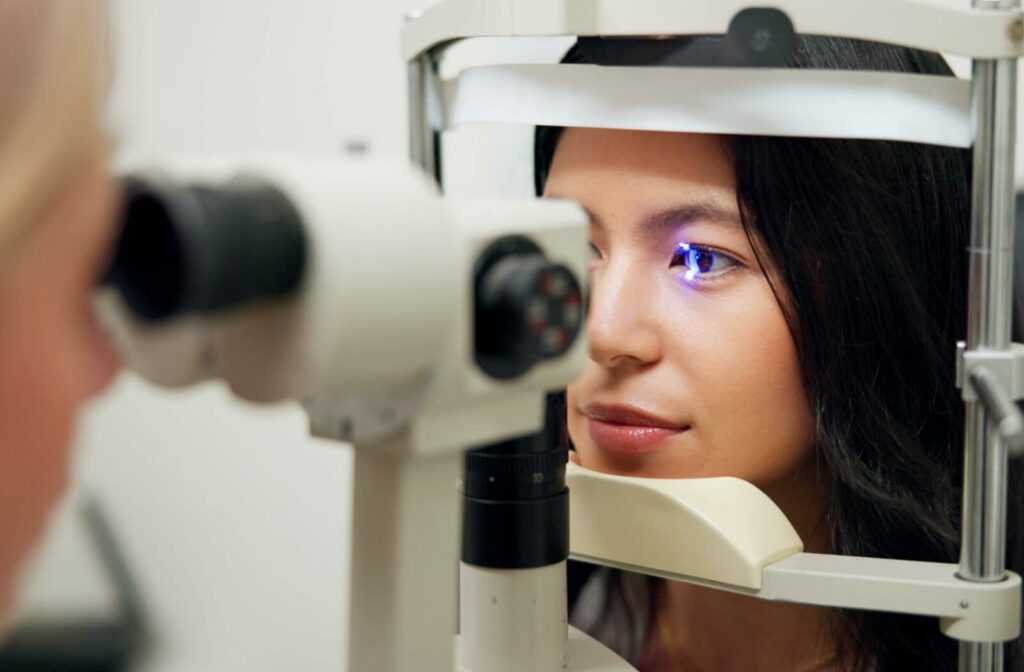
You may notice that everything looks bright and a bit blurry after a comprehensive eye exam. This temporary effect is a regular part of many eye exam appointments. Eye dilation gives your eye doctor a clear view of your eye’s health, ensuring we can provide the in-depth care your family deserves.
A common question people ask is how long this effect lasts. For most people, eye dilation can last for 2 or more hours. Several factors can influence this timeline, and there are simple ways to stay comfortable while your vision returns to normal.
Why Your Eye Doctor Dilates Your Pupils
A dilated eye exam is a key part of preventive eye care. The black circles in your eyes, called the pupils, are widened to provide your eye doctor with a better window to the back of your eye. This increased visibility allows for a thorough check of your retina and optic nerve.
This simple step helps your eye doctor spot early signs of various eye conditions. It’s a valuable part of maintaining your long-term vision health.
The Timeline for Dilated Eyes
The eye dilation process is straightforward. Your eye doctor places special drops in your eyes. Then wait about 20–30 minutes for your pupils to fully open before the exam continues.
The effects of dilation typically last for 2 or more hours. It’s not unusual for this to extend longer, sometimes for up to 24 hours. But your vision gradually returns to normal as the drops wear off. During this time, the most noticeable effects are sensitivity to light and difficulty focusing on close objects. This effect is temporary and expected.
Factors that Affect Dilation & Recovery
Your eyes react to dilating drops in their own way. A few key factors can influence how long your pupils stay wide. Understanding them can help you know what to expect.
Your Eye Color
If you have light-colored eyes, such as blue or green, you may notice that they stay dilated longer. This difference is compared to someone with dark brown eyes.
Your Age
Age can also affect the duration. A child’s focusing muscles are powerful, so they may need different drops. This difference in muscle is a reason that children’s eye exams are tailored to their specific needs, and their eyes might remain dilated for a longer period.
The Type of Drops Used
Your doctor uses different types of drops for various purposes. Some drops are designed to wear off more quickly than others. The strength and type of drop used directly affect your recovery time.

Tips for Comfort and Safety
You can take a few simple steps to make the hours after your exam more comfortable. A little planning makes all the difference for a smooth experience.
Protect Your Eyes from Bright Light
Your pupils cannot shrink to block out light, so you’ll feel extra sensitive to both sunlight and indoor lights. It’s a good idea to:
- Bring a pair of quality sunglasses to your appointment to wear on the way home
- Stay in dimly lit rooms when possible until the drops wear off
- In some cases, you may need to arrange for transportation depending on how you typically react to eye dilation
Rest Your Eyes from Close Tasks
Focusing on your phone, a book, or a computer screen will often be difficult. To avoid eye strain, it’s helpful to limit these activities until your vision returns to normal. You can also practice the 20-20-20 rule to give your eyes a needed break.
Wait for the Drops to Wear Off
You may wonder if you can speed up the process. The best approach is to let the drops wear off on their own. Resting your eyes and following the comfort tips above is the best course of action.
Eye Dilation Is Safe
Understanding what to expect can help you plan your day comfortably and safely. Our team at the Vision Care Center is dedicated to providing you with clear information every step of the way.
If you have any more questions or would like to schedule an appointment with your eye doctor, please reach out. Your family’s vision is our focus.